Friday, August 11, 2006

Friday, July 28, 2006
Any Colour You Like
The time we spent together
I never asked
“What’s your favourite colour?”
(Or is that “favorite color” ? I spell badly when
I speak on this continent.)
Perhaps we were too busy
Drinking in the light of some
Distant star
To determine the hue that
Most pleases you.
(Mine is grey, by the way.
(Grey or gray?))
Or maybe we did not care
To pause while chasing dream-drunk
Turtles in the Valley,
Or were we too engrossed
In sending our thoughts
Sailing
Through treacherous tides?
But as speculation lays truth bare
I have reached the conclusion
That you (and I)
Simply did not care.
Tuesday, July 11, 2006
...And Then there Were Some: RIP Syd Barrett
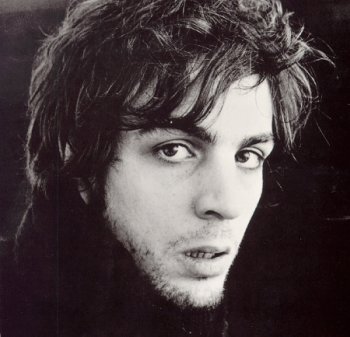
Former Pink Floyd frontman Syd Barrett died today at the age of 60. Here's an edited version of an essay I wrote at college about him some time ago. Syd Heil...
As the psychedelic swirl of the band’s music takes the crowd to unexplored areas of trance-like consciousness, the energy on stage reaches a grim height. The stage lights and smoke only add to the already stifling heat of the club, and gradually, it appears as if the face of the guitar player is melting in grotesque measures. The crowd looks on in horror at this bizarreness, but the band simply plays the changes, unmoved by the display. If they are worried, they do not show it. They know that it is only a matter of vast quantities of pudding melting from the guitarists head; another day brings another theatrical stage act. This is not a scene from some Rocky Horror- style flick, but a day in the life of one of
Syd Barrett was the guitarist and songwriter when Pink Floyd began their career in 1964. His distinctive voice and musical sensibilities successfully melded the pop song-craft of his time with the swirling soundscapes of psychedelia. This seminal work can be heard on their earliest singles releases and the album Piper at the Gates of Dawn. But Barrett had a frail, soft-spoken personality, and the touring and recording demands from his managers, who he was reluctant to refuse, soon took their toll. Through the next few years, he grew more and more erratic. At times, he did not turn up at concerts, and when he did, would often stand mute and immobile throughout the show. The band decided to recruit guitarist David Gilmour as a back-up guitarist and vocalist to help Syd during the concerts, but soon, it became evident that Barrett’s sanity was slowly slipping away from him. In 1968, he was eased out of the band, leaving bassist Roger Waters to assume the role of band leader.
Over the years, there has been some conjecture about the reasons for Barrett’s mental ill-health. The most convincing reason is that he suffered from catatonia, also known as catatonic schizophrenia. Like Barrett, most catatonics suffer from bouts of five distinctive symptoms: reduced responsiveness to their surroundings, lack of resistance to instructions, rigid posturing that often cannot be altered for long periods, excited motor activity, and bizarre postures. While Barrett did show these symptoms, there has also been debate as to whether he suffered from Asperger’s syndrome, which is a type of pervasive developmental disease similar to autism.
There has also been much speculation about Syd Barrett’s LSD use. He is often portrayed as a man who ‘fried his brains’ with his constant LSD use. According to some reports, he was actually slipped the drug without his knowledge, and his episodes with the drug only served to further aggravate his delicate mental state.
In the years since he left Pink Floyd, Syd Barrett has been in and out of mental institutions, and is said to be improving. He released two solo albums to critical acclaim. But Barrett’s greatest influence has been on the band he created. Many of their most brilliant musical statements, like the albums Dark Side of the Moon and The Wall, are centered on ideas of madness and depression. Their art-rock classic Wish You Were Here and the epic song ‘Shine on You Crazy Diamond’ were dedicated to him, and reflect their own struggles in dealing with Barrett’s catatonia and mental breakdown. Despite their huge successes in the decades following Barrett’s exit, Pink Floyd still acknowledge his undying influence on their life and work.
In many ways, rock stars are parodies of themselves. Every story of sex, drugs and rock ‘n’ roll is a cliché that grows in stature over time into legends beyond themselves. Some people like John Lennon, Jim Morrison and Jimi Hendrix, though brilliant in their own right, have had their personas blown to such epic proportions that it’s hard to sift the truth from the fables. There are no clichés in Syd Barrett’s story. The legend has diminished over time, much like his mental stability, into a sad story of a truly extraordinary person, who has been broken by catatonia and drug use.
Saturday, July 08, 2006
The Road to Our Red Hill: Part II
Grandfather refilled his glass of scotch and continued…
Andreij never knew for certain what was ailing his Manu. She sometimes told him how she felt, but often she was quiet, never revealing the symptoms for fear of upsetting Andreij. Sometimes she would cough and breathe heavily, some days she would sleep for hours in the makeshift bed he had made for her in the wagon. But with each passing day, the saddest symptom was silence. Andreij longed to know how he could help her, but she believed it to be a passing malady.
“Don’t worry Andreij. Just wait till we reach your Red Hill. I’ll be better then.”
Despite himself, Andreij believed her. There were days when the snow would sprinkle in beauty, only to make the road a slippery, treacherous passage. They halted some days, and Andreij brewed her pots of tea, while she smiled at him from the blankets. He stared for hours at the passing woods and barren fields. There was less and less absent chatter as the days passed, and the modest crowds on the road became more and more sporadic. Andreij tried to make conversation with people he saw, trying to make up for Manu’s silence. He longed for a physician to pass by so that he could ask him to examine Manu, but none came. Of course, Manu scoffed good naturedly at Andreij’s concern,
“Give it some time Andreij. By the time we reach your Red Hill, I shall be well.”
But she did not get well. They went for days without seeing anyone on the road. One evening they saw a peasant pass by them. He was dressed in deep grey, his shoulders were bent, and he carried a sickle in his hand. What was he going to harvest in the winter? Andreij wondered.
“Excuse me, good sir,” Andreij called out to him. But he simply shuffled passed them, ignoring Andreij’s calls. The peasant was humming a tune to himself. The same tune that Andreij heard from the roadside singer. He feared that the memories would emerge again, without Manu's words to comfort him. But now, all he remembered was warm hands.
The peasant turned the corner ahead of them, and disappeared out of sight. Andreij trudged along beside the horse, the wagon, and his silent sleeping companion. As they turned the corner, he heard Manu whisper something to him. He couldn’t hear her. So he stepped up closer to her and placed his ear close to her pale lips.
“It seems we have reached our Red Hill.”
Andreij looked bewildered, and looked further up along the road. There was a small wooden post, worn and battered, with the name ‘Red Hill’ inscribed in fancy, flowing hand. Beyond it were two stone gateposts, with only a single gate. He ran back to Manu, elated.
“We did, we did! We found our Red Hill!” he exclaimed. As he ran he saw a smile playing on her lips. But she had drifted to sleep again. He came close to her, held her face in his palms, and kissed her. But her lips looked and felt like winter.
And a tear splashed from his cheek to hers.
….And a tear splashed from Grandfather’s cheek to the floor.
And a tear splashed from my cheek, to the floor.
The Road to Our Red Hill: Part I
As I sauntered through my home from room to room, there were memories jumping out at me from every corner. Bookcases and peeping doors opened slowly to reveal reminiscences, often greeting me with a flourish of ancient dust. But much of the home was still in use, and soon my wanderings led me to the study. And there he sat, sliding the fingernails of his left hand through the grain of the armrest, clutching his scotch in the pudgy fingers of his right, and, as always, telling stories. Today, Grandfather’s audience was an enraptured trio of younger cousins. I listened from the far end of the room expecting to hear some familiar tale being retold, but to my surprise I found that I had not heard it before. Now that I think of it, I have never heard Grandfather retelling a story. Only telling them, but with an air that made you wonder if there were some grains of truth scattered among these fictions of his imagining. I had missed half the tale, but I sat down anyway…
“I regret that I will not be able to follow you past the border. You are like a brother to me, but I must return,” said Juan, as he turned his horse and started it off in a trot back down the road. “May She be with you till you reach your destination…wherever that is...”
“I lament that I will not be able to follow you past the border. You are like a brother to me, but I too must return,” echoed Alexia, as she turned her horse and followed Juan back down the road they had come. “May She be with you till you reach your destination…wherever that is...”
There was a pause which Andreij tried to fill by awkwardly kicking stones at a nearby shrub. But Fynn eventually spoke as well.
“You know that I cannot follow you. But keep the horse. You will need it to get to wherever you are going”
Fynn turned, but instead of returning down the road, he climbed the fence and began to cross the field, making his way North. Andreij called out to him as he left, “Forgive me Fynn.”
“What for Andreij? There is nothing to forgive…” But there was little to hide the disappointment on Fynn’s face. Maybe time would erase it. “May She be with you, Andreij.”
Andreij gazed down the road towards the retreating figures of Juan and Alexia. They grew fainter as the tunnel of overhanging trees engulfed them. Andreij stared and strained till he could no longer discern them from the other dark specks in the distance. Fynn was lost to sight long ago.
Andreij turned to Manu, who had watched the proceedings in silence. “What about you Manu, don’t you think you had better leave too? Winter will be here and I still don’t know where we will be going. Who knows how long it will take before we reach the end of our wanderings? Perhaps you had better head back down the road as well. You can still catch Juan and Alexia if you take the horse. After all, I haven’t much need for it. I’ll just walk.”
Manu smiled, half to herself. Andreij knew that she wouldn’t leave. And she knew that Andreij did not wish for her to leave. These were his desperate cries to stay with him. And she heard. And she listened.
“Of course you know where we will be going: to that Red Hill.”
“But that is only half way. If we reach there in a year, it means that there will be at least a year more till we reach the end,” retorted Andreij, with his characteristic self doubt.
“But if we reach that Red Hill in a week, then we only have two weeks left. Cheer up.” Manu smiled again, and Andreij looked at the wagon which was now almost half empty. But there were enough supplies, he deemed, and they set off.
Those were happy days for Andreij and Manu. He was quiet, and she would talk. She was endlessly fascinated by the things she saw on their way, and she never complained too much. Birds, flowers, young peasants. They all became subjects of avid conversation. But Andreij’s silence made monologues of Manu’s chatter. He was glad of her company. The ways were unfamiliar, and he often longed for home. He also thought of Fynn, Juan and Alexia. With the hours he spent pondering their departure, all at once, so suddenly, he realized that he was never sure whether he had left them, or they him. The roads they took were muddy, and with some company now and then. A few noblemen rode by, silently passing on their tall horses. Peasants with their shovels and spades slung over their bent shoulders waved or tipped their caps. With Manu by his side it became easier to forget how much he longed for Fynn, Juan and Alexia. They had been an eager company, but the pair he found himself a part of was just as buoyant. The summer rays lit up their days, but soon, as they traveled on, their breath began to turn misty, and they found their cloaks pulled tighter, and the scarves emerging from their bags.
One day they found a young musician, singing and playing a somber tune by the side of the road. Andreij knew the tune, and the words were vaguely familiar. He could not place it, but the song dragged up memories from childhood that he had long placed in secret burrows. They emerged from their hibernation and left him even more silent than usual. Manu simply took to holding his hand more. The song played in his head for days. He rolled the words of the song around his tongue, and the tune hung around his ears like the fog growing around them, while Manu’s fingers caressed the warmth back into his palms.
“Don’t worry Andreij, we’ll be at the Red Hill soon.” She smiled. He smiled.
And winter grew, till one day Manu woke up and said, “Andreij, I’m sick.” All at once, so suddenly, things changed again.
My Family
With each hasty word, I draw
one
more
thirsty
twig
From under the pile of desiccating stems
That is my family.
Our precarious perch
Will drop its fruit to the undergrowth,
And the wind will apportion the stench of silence
Between us.
Soon
We will scream back at the din of echoes
That ring against our thatch-work,
And huff.
And puff.
Till we all fall down.
Plague Eight
With our cricket screech song
We burst brain and brunch on bran in
Our easy.
Going life to breath to cold in
Our fields.
Of gold we dream in endless plains
Bounded in a hop.
Skip and jump to the map
Of many crickets, in one locus.
Our legs eke, lips chew
And wings banquet the sun.
But.
As the blades dull and the ears fade
We beat, shrink and we bury.
My Mimosa
My mimosa lies nondescript in the noonday
Slender limbs splayed in artless play
She hears the call of some distant wind
Upon its westward way.
"I have borne the dove and bird of prey
And bring memories of oceanspray
But now my wandering is at an end
Won't you dance with me today?"
In quiet tumult she folds her palms
Wilting before this unnamed harm.
But she has heard this westwind's song before
And it soothes her into blissful calm.
She returns to caper silently,
For she knows that it is me
Sunday, June 18, 2006
Hit Me With Your Best Shot
I pray the Lord nudge me from above
If I ever talk of professing Love
For this feeling I take to be Love benign
Is probably the effect of too much wine
Monday, June 05, 2006
Sunday, May 21, 2006
Inferno
***
“No Madam. Manorama only two rupees fifty paise per kg. Hindu three.”
Monday, May 15, 2006
Puhltikl Klout
Thursday, May 11, 2006
Final Questions
Our foot soles mark, in the mud we leave behind,
The entropy of reason,
The concentricity of inevitable dilution.
Sipping slow seconds in the
Insurance of infinites
Lying before us
In warranties of wear and tear
And affidavits for anarchy.
Our squalid treads in hapless unison
Stride towards the light switch to the Sun.
Flick Switch Off Cold Dark
We lie down with inanimate lovers: cities built, empires adored
All settled now in a heap of equitable lassitude.
Together we rest in the comfort of the universe’s ultimatum.
Dust to dust. We are food for thermodynamic legality.
Wednesday, April 26, 2006
Kia and the Boy Dragonfly - Part 1
“Indeed? Well perhaps during the course of his pedantry he has chanced upon the study of hydrogen bonds. I recently consummated my own research in this field. I spent a good part of the past year in Farmer Neal’s Farm,” said the boy, sitting perfectly poised on the stump of a tree, back straight and slick hair set in place. Kia hadn’t a clue as to what he was saying, and had never even heard of Farmer Neal. It sounded insulting, and it probably was. More than anything, Kia hated it when people talked of their friends and acquaintances as if the whole world knew them on a first-name basis. Her friend Adam did this often and she loathed it. So Ambrose and I spent the whole day together catching prairie dogs. Adam had been talking of this Ambrose fellow for a few months and had never cared to point out who exactly he was. Kia hadn’t bothered to inquire further.
Kia was a girl. And she was the only Kia in the world. She knew that, because her father the Wizard had told her that her name translated loosely into “Characters and events in these stories are fictional. Any resemblance to real events and persons is purely coincidental.”
“What a tiresome translation. And may I be frank in saying that it is a rather phonetically unlovely nomenclature,” said the boy, rising to his feet, when Kia pointed out the uniqueness of her name. By now, Kia was seething, but her father the Wizard had always taught her to remain calm in such situations. It was only this training that kept her from slapping Adam hard behind his knees. Similar instincts were creeping up on her now, but she kept them in check. Besides, the boy was wearing grey pants that looked like a 60-40 blend of polyester and cotton, so slapping him behind his knees would be rather futile.
“Well, let’s hear your name then, smarty pants,” said Kia.
“In actual fact, my slacks are a 60-40 blend of polyester and cotton. But yes, they do look rather smart, do they not?” The boy then proceeded to look down at his paints, admiring them, carefully fingering the creases and flattening each leg from his waist to his knees. Kia rolled her eyes, and walked off through the thick grass in the direction of her home.
“Djkrie,” said the boy, calling after her.
Kia spun around on one heel. “What?”
“That is my name. Djkrie,” said the boy, with a look of smug satisfaction on his face.
“That’s the ugliest name I’ve heard in my life.”
“So be it. Have you met Trotsky?” The boy seemed somewhat crestfallen at the response to his name, but quickly recovered. Kia was annoyed. This Trotsky person sounded a bit like Ambrose.
“Who? Trotsky? The Russian revolutionary chap? Nope. Haven’t had the pleasure. Perhaps, during the course of your study with Farmer Neal, he told you that Trotsky died quite a while ago?”
Djkrie did not respond. He whistled two sharp notes, and called out, “Trotsky.”
Kia noticed a faint buzz filling the air. It grew louder over the next few seconds, and Kia looked around to find its source. Suddenly, a large, initially unidentifiable flying object flew into her view. The buzz came from a pair of glass-like wings, thinly veined with a mesh of red lines. They were flapping at a furious pace, and Kia was sure she heard ‘Purple Haze’ playing somewhere in the background as it hovered in front of Djkrie.
“This is Trotsky,” said the boy, absently stroking Trotsky’s long, glistening abdomen. It was about six feet in length and looked like shiny sections of sushi squashed together.

Trotsky was a dragonfly. The most beautiful, and the only, dragonfly Kia had seen.
Tuesday, April 25, 2006
Earth, Spirit, Blues
I sit on a chair
Like jazz.
Chromatic thoughts colour my
Sullen syncopations,
Drifting into a lazy day's coda
From one mode of sorrow to another.
Old blues lick new wounds
Panning my self indulgence
Across one cheek,
And now another.
But I,
I
Can’t
Quit
You
Babe.
Tuesday, April 04, 2006
I Advance Masked
I advance masked
Through eddying crowds
Of my dreamless fellows.
We have offered them up,
Severed, hacked, mutilated
And burnt at the stake
In our mindless sacrificial rite
Baptized daily life.
What we seek is the peace of dreamless sleep.
What we receive
Is ash.
Saturday, April 01, 2006
Last Night...

Jamming with this guy....

And this guy.

This guy decided to tag along too...

This lady walked onstage once in a while, and blew my mind each time.


And because he's so nice, this guy opened up the show...
...and did I mention that someone else bought me the ticket?
Tuesday, March 28, 2006
At The Melon Stand
I was a riding in my car one day
Shopping for some melons
When from my Maruti I glimpsed
A fateful glimpse of Helen.
Helen was a friend of mine
In her jalopy flying
From her anxious look I soon surmised
She too was melon buying.
But then I found, to my dismay
The cause of her worried pose
It was not because of the melon stand
But due to something in her nose.
So Helen reached in eagerly
And found the sinful foe
For some young ladies of high society
Prefer to reach in, rather than blow.
While I must admit, I flinched a bit
And the incident left me vexed.
But nothing I’ve known could ready me
For what I witnessed next.
Graceful Helen, maiden made
Of niceness, spices and sugar
Proceeded to, without remorse,
Feast upon her booger.
Monday, March 27, 2006
Messianic Doorknobs
There are silences in my life that need to be shouted at. For a time, there’ll be no space in my room for pompous verse, only vitriol and prose. No space for graceful complacence, but a To Lease sign for jagged bitterness. I like to think I avoid talking about my mundane everydayness here, but sometimes, the plainer the autobiographical tirade, the greater the catharsis. Sometimes, it’s nice to put words together that in the end have no meaning whatsoever. It reminds me of how much bullshit we are all full of. The fumigating bloke assuaged the licensing fee of messianic doorknobs, scratching a storm in the gaping crevice between shoe polish. Sometimes, even a bleak outlook seems wholly pointless. At that point, grammar
Syntax
Meaning
All
Fall
Over
The lips
Of a gaping
Precipice.
